Distributed Generation and Home Solar: How Smart Plugs Fit In
Your rooftop panels are producing electricity, the inverter is humming away, and yet you still have no real idea where those kilowatt-hours are going. Is the dishwasher using your solar power, or is it pulling from the grid while your panels export cheaply? This is the strange blind spot of modern home energy: we generate more than ever, but we monitor less than we should. In this guide, we look at how distributed generation, smart meters and affordable smart plugs fit together — and how a £20 device can turn a confusing solar setup into a system you actually control.
What Distributed Generation Means for UK Homes

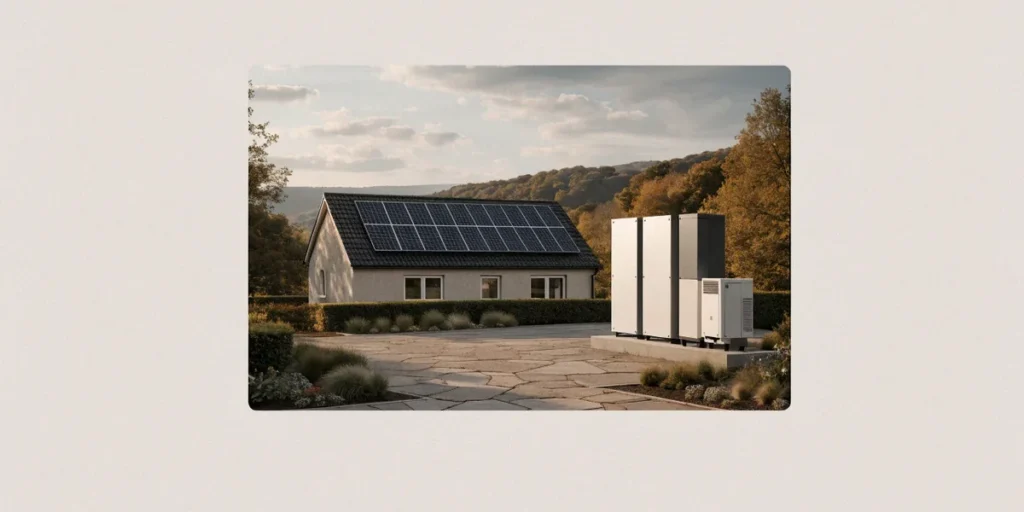
Distributed generation simply means producing electricity close to where it is used, rather than relying entirely on large power stations hundreds of miles away. For most UK households, that means rooftop solar. Instead of electricity flowing one way from a central plant to your home, power now moves in both directions — and that changes everything about how we manage energy.
From Centralised Grid to Local Power
The traditional grid was built around a handful of enormous generators feeding the transmission network. Distributed generation flips that model. A solar array on a semi-detached house in Leeds or a terrace in Cardiff produces power at the point of consumption, reducing transmission losses and easing pressure on the network. The UK installed over 1.2 million solar PV installations by 2023, and the majority of those are residential rooftop systems — a genuine shift toward local, household-level generation.
Why UK Homeowners Are Embracing Solar
Falling panel costs, rising electricity prices and the Smart Export Guarantee (SEG) have made solar far more attractive. The SEG requires licensed electricity suppliers to pay for excess solar exported to the grid, so every unit you don’t use yourself can still earn you something. That said, export rates are usually lower than import rates, which is why using your own generation first — rather than selling it — is where the real savings sit.
How Home Solar Works with Your Smart Meter
Understanding the hardware chain helps you see where smart plugs add value. Solar panels produce direct current (DC), an inverter converts it to alternating current (AC) for household use, and your smart meter records what crosses the boundary between your home and the grid.
Solar Generation and Inverter Basics
Panels generate DC electricity, and a string or hybrid inverter converts it to the 230V AC your appliances need. Hybrid inverters also manage battery charging. Brands like Tesla Powerwall, GivEnergy and MyEnergi Zappi have become familiar names in UK homes because they integrate neatly with smart meters and time-of-use tariffs, letting you store surplus solar or divert it to an electric vehicle instead of exporting it for pennies.
Smart Meter Data: Import vs Export
A smart meter tracks two directions of flow: import (electricity you buy from the grid) and export (electricity you send back). Half-hourly readings feed your supplier and, crucially, feed apps and tariffs that reward flexibility. If you can see when you’re importing versus exporting, you can start shifting heavy loads into the export window — or better still, into the generation window itself.
Battery Storage and Time-of-Use Tariffs
Batteries let you store midday solar for evening use, when grid prices peak. Combined with time-of-use tariffs, a battery can charge overnight on cheap rates and discharge during expensive hours. This is where home energy stops being passive and becomes an active, optimised system — and where smart plugs begin to earn their keep.
Smart Plugs: The Missing Link in Your Solar Setup
Whole-home monitoring tells you the big picture, but it rarely tells you which appliance is causing the spike. Smart plugs fill that gap for a fraction of the cost of a full energy management system. Popular UK models include the TP-Link Tapo P110, Shelly Plug S and Meross MSS310 — all of which offer energy monitoring and app-based scheduling.
Monitoring Individual Appliances
Plug a tumble dryer, washing machine or dehumidifier into a metering smart plug and you’ll quickly learn its real consumption. That data is often surprising: a seemingly efficient appliance running at the wrong time can cost more than an older one run during peak solar hours.
Automating Devices to Match Solar Output
Once you know when your panels are generating, you can schedule appliances to run then. A smart plug can switch on a dishwasher at midday, run a pool pump during peak sun, or charge power tools while the inverter is at full tilt. The result is more self-consumption, less export at low rates, and lower bills.
Integrating Smart Plugs with Home Assistant
For tinkerers, Home Assistant brings smart plugs, inverters and meters into one dashboard. You can build automations such as “if solar export exceeds 500W, turn on the immersion heater” or “if Agile prices go negative, charge the car.” It’s a hobbyist-friendly route to genuine demand flexibility.
- TP-Link Tapo P110 — cheap, reliable, energy monitoring built in
- Shelly Plug S — excellent for Home Assistant users and local control
- Meross MSS310 — solid scheduling and voice assistant support
Demand Response and the Future of Home Energy
Demand response is the grid’s way of asking households to shift consumption away from peak times. It’s no longer theoretical — UK homes are already being paid to do it.
What Is Demand Response?
Demand response means adjusting when you use electricity in exchange for a reward or a lower price. Instead of firing up a gas peaker plant to meet a 6pm surge, the grid pays consumers to reduce or delay demand. It’s cheaper, cleaner and increasingly automated.
UK Schemes Rewarding Flexible Energy Use
National Grid ESO’s Demand Flexibility Service paid UK households to shift energy use away from peak times in 2022-2023, with millions of pounds distributed via suppliers. Octopus Energy’s Agile tariff goes further, offering half-hourly wholesale prices, which means electricity can be extremely cheap — or even negative — at certain times. Smart plugs can automate cheap energy use by switching loads on when prices dip.
How Smart Plugs Enable Demand Response
A smart plug connected to a tariff-aware app or Home Assistant can respond to price signals automatically. When Agile prices fall, it runs the washing machine. When a Demand Flexibility event is called, it pauses the tumble dryer. No manual intervention, no guesswork.
Practical Steps to Optimise Your Home Solar and Smart Plugs
You don’t need a full retrofit to start. Here’s how we’d approach it in stages.
Audit Your Appliances with Smart Plugs
Start by plugging your biggest loads into metering plugs for a week. Tools like the Loop app and Bright app give you whole-home context, while manufacturer apps from TP-Link and Shelly show per-device detail. Together they reveal where your solar actually goes.
Set Schedules and Automations
Once you know the patterns, build schedules around them. Run heavy appliances during peak generation, delay others to off-peak windows, and use automations to react to solar export or Agile pricing.
Combine with Battery Storage and EV Charging
Add a battery and an EV charger like the MyEnergi Zappi, and the whole system becomes self-reinforcing: solar charges the battery, the battery charges the car, and smart plugs mop up the remainder. It’s a genuinely integrated home energy setup.
FAQ
Do smart plugs work with solar panels?
Yes. Smart plugs don’t connect to the panels directly — they control appliances. By scheduling those appliances to run when your inverter is generating, you increase self-consumption of your solar power.
Can a smart plug help me earn more from the Smart Export Guarantee?
Indirectly, yes. The SEG pays for exported electricity, but import rates are higher than export rates. Using solar yourself via smart plug scheduling usually saves more than exporting it.
Which smart plug is best for energy monitoring in the UK?
The TP-Link Tapo P110 and Shelly Plug S are both popular, affordable and reliable. Shelly is favoured by Home Assistant users for its local control.
What is Octopus Agile and how do smart plugs help?
Agile offers half-hourly wholesale electricity prices. Smart plugs can automate cheap energy use by switching devices on when prices are low or negative.
Can I join the Demand Flexibility Service with just a smart plug?
You need a compatible supplier and, usually, a smart meter. A smart plug helps you actually shift the load when an event is called, making participation easier and more automatic.
Combining distributed generation, smart meters and smart plugs gives UK households real control over both energy costs and carbon footprint. You don’t have to start with a battery or an EV charger — a single metering smart plug is enough to reveal where your solar is going and how to use it better. Start small, measure, then automate.