Smart Meters in the UK: What to Know
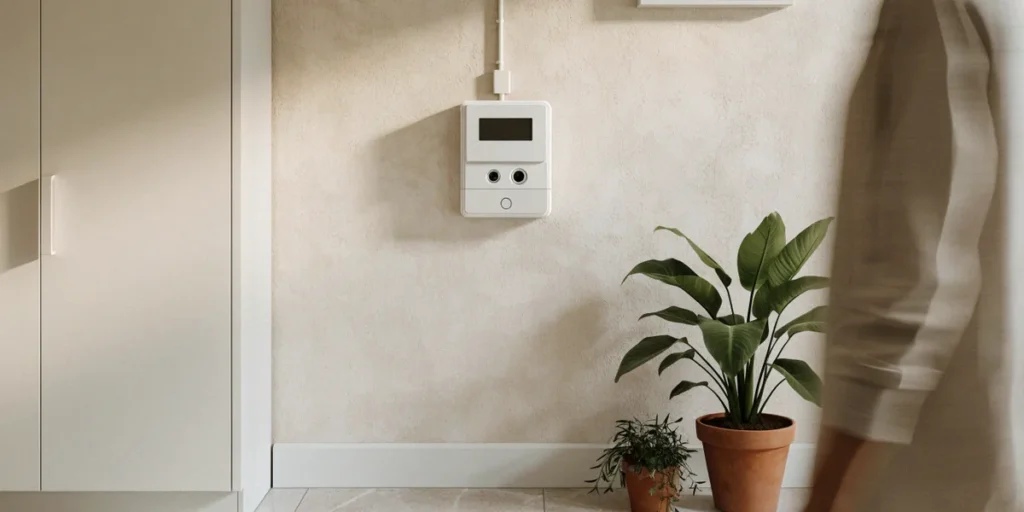
We still remember the first time we stood in a UK kitchen and watched a little grey display unit flicker to life. It was a smart meter’s in-home display, and within seconds we could see exactly how much electricity the house was using in real time. That moment changed how we think about energy monitoring. Instead of waiting for a quarterly bill and guessing what caused it, we could see the cost ticking up as the kettle boiled. Since then, we have tested smart meters alongside smart plugs in homes across the country, and this guide covers everything we have learned.
What Is a Smart Meter and How Does It Work?
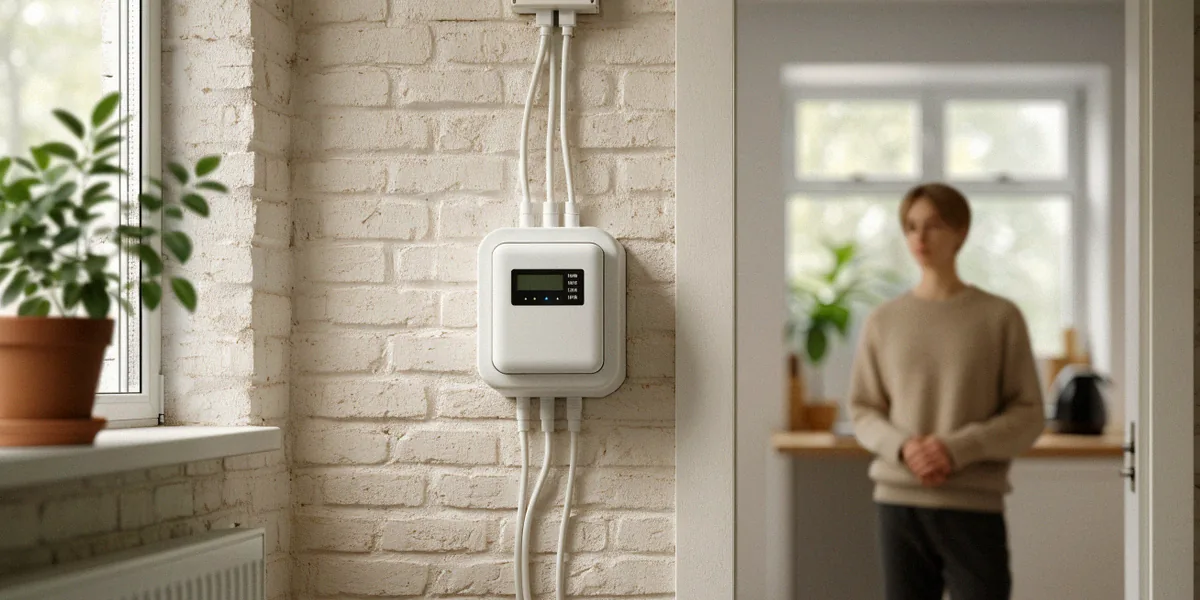
A smart meter replaces the traditional gas and electricity meters that have sat in UK homes for decades. Instead of a dial or a mechanical counter that someone has to read, a smart meter records your usage digitally and sends those readings automatically to your supplier. That means no more crawling under the stairs with a torch, and no more estimated bills from the likes of British Gas, Octopus Energy, or EDF. The meter also communicates with an in-home display (IHD), a small screen you can keep on a kitchen counter or hallway shelf.
Under the hood, smart meters in Great Britain use the DCC (Data Communications Company) network to transmit data. The DCC acts as a central communications hub, linking your meter to your supplier and to other authorised parties such as network operators. It is a bit like a mobile network built specifically for energy data.
The Role of the In-Home Display (IHD)
The IHD is the part of the system most people actually interact with. It shows current electricity and gas usage, often in pounds and pence, and lets you see how much you have spent today, this week, or this month. We find the live view especially useful because it turns abstract kilowatt-hours into money. Boiling a full kettle, running a tumble dryer, or leaving a games console on standby all produce an immediate visible jump. The IHD is not a control device, though. You cannot switch appliances off from it, which is where smart plugs come in.
How Smart Meters Communicate: DCC and Wide Area Network
Smart meters connect to the DCC through a wide area network, similar in principle to how a mobile phone connects to a mast. In most urban and suburban areas this works reliably. The meter also forms a home area network with your IHD and any smart gas meter, so gas usage can be reported through the electricity meter’s communications link. When everything works, readings flow to your supplier without anyone lifting a finger.
Smart Meters vs Smart Plugs: What We Recommend for Energy Monitoring
Here is the distinction we always explain to friends: a smart meter measures your whole home, while a smart plug measures one appliance. The smart meter tells you that your house used 12 kWh yesterday. A smart plug tells you that the old chest freezer in the garage is responsible for 3 kWh of it. Both are valuable, but they answer different questions.
Smart plugs such as the TP-Link Kasa range, the Amazon Smart Plug, and the Shelly Plug sit between a socket and an appliance and report real-time power draw. TP-Link Kasa smart plugs are particularly popular for UK energy monitoring because they combine scheduling, away mode, and consumption tracking in an affordable package. If you want to know which device is quietly inflating your bill, a smart plug is the tool that tells you.
When a Smart Meter Alone Is Not Enough
A smart meter can show a spike when the oven turns on, but it cannot label that spike. If three appliances cycle on at once, the whole-home figure merges them into one number. Smart plugs break that number down appliance by appliance. In our experience, the biggest offenders are often things people forget about entirely: set-top boxes, older fridges, aquarium heaters, and phone chargers left plugged in with nothing attached.
Top Smart Plugs for UK Homes: TP-Link, Shelly, and Meross
We have tested a range of options, and a few stand out for UK buyers:
- TP-Link Kasa: Reliable Wi-Fi connection, excellent energy monitoring dashboard, and frequent discounts. A safe default choice.
- Shelly Plug: Favoured by tinkerers who want local control, MQTT support, and detailed power logging without relying on the cloud.
- Meross: A budget-friendly alternative with HomeKit support on some models, useful if you run an Apple smart home.
- Amazon Smart Plug: Simple setup and tight Alexa integration, though energy monitoring features are more limited.
The Rollout in the UK: Progress, Problems, and Suppliers
The UK government aims for every home to have a smart meter by 2025, and suppliers have been obliged to offer them to customers for years. British Gas, E.ON, Octopus Energy, and others have installed millions of meters between them. Progress has been real but uneven. Some households get a smooth installation and never think about it again. Others run into signal problems, appointment delays, or meters that lose connection after a supplier switch.
SMETS1 vs SMETS2: What You Need to Know
SMETS stands for Smart Metering Equipment Technical Specifications, and the version matters. First-generation SMETS1 meters were rolled out early and often lost smart functionality when a customer changed supplier. Second-generation SMETS2 meters use the DCC network for reliable communication and retain smart features even if you switch providers. If you are offered a choice, SMETS2 is the one to take. Many SMETS1 meters have now been enrolled into the DCC so they behave more like SMETS2, but the newer hardware remains preferable.
Why Some UK Homes Still Struggle with Connectivity
Smart meters depend on signal, and signal is not uniform across the country. Rural areas, thick stone walls, and basements can all interfere with the wide area network connection. We have seen homes in remote parts of Wales and Scotland where the meter simply cannot hold a connection, leaving the IHD blank and readings estimated. Suppliers can sometimes fit an aerial or relocate the communications hub, but it is not always solvable. This is one reason we often recommend smart plugs as a backup monitoring method: they run on your home Wi-Fi, which you control.
Demand Response and Time-of-Use Tariffs: How Smart Meters Enable Savings
Smart meters do more than report usage. They open the door to tariffs and schemes that reward you for using electricity at the right time. Because a smart meter records half-hourly data, suppliers can bill you different rates depending on when you use power. This is the foundation of demand response, and it is where some of the biggest savings now live.
Octopus Agile and Similar UK Tariffs
Octopus Energy’s Agile tariff offers half-hourly variable pricing, meaning the rate you pay changes every 30 minutes based on wholesale market conditions. On windy nights, prices can fall to near zero or even go negative, and we have seen Agile customers paid to charge their cars. Other suppliers offer similar time-of-use products, including Economy 7 style tariffs and EV-specific rates. The catch is that you need to shift flexible usage, such as laundry, dishwashing, and EV charging, into the cheap windows.
Using Smart Plugs to Automate Demand Response
National Grid’s Demand Flexibility Service pays users to shift usage away from peak times during specific events, usually winter evenings. Households with smart meters and eligible suppliers can earn rewards for reducing consumption during those windows. Smart plugs make this almost effortless. You can schedule a heater, dehumidifier, or charger to pause during an event and resume afterwards, without lifting a finger. We have found that pairing a smart meter with a handful of smart plugs turns demand response from a chore into an automatic habit.
Energy Saving Tips: Combining Smart Meters and Smart Plugs
The real magic happens when you use both tools together. The smart meter and IHD give you the big picture, and smart plugs give you the detail. Here is how we approach it in our own homes.
- Check the IHD at the same time each day to build a baseline of normal usage.
- Use smart plugs to measure suspect appliances for a week before deciding whether to replace them.
- Set schedules for heaters, chargers, and lamps so they run only when needed.
- Hunt standby power by watching the IHD with everything switched off.
- Integrate smart bulbs such as Hue with plugs to create lighting scenes that cut waste.
Step-by-Step: Auditing Your Home Energy Use
- Note your daily kWh from the IHD for a week.
- Plug your highest-use appliances into smart plugs one at a time.
- Record each appliance’s weekly consumption.
- Rank them and target the top three for scheduling or replacement.
- Recheck the IHD after a month to confirm the reduction.
Automating Savings with Schedules and Scenes
Once you know what uses power and when, automation does the rest. TP-Link Kasa and Shelly both support schedules and timers, and Hue scenes can coordinate lighting with plugs. We like setting a “peak avoidance” scene that pauses non-essential loads between 4pm and 7pm, then resumes them overnight when rates are lower. It is a small change that adds up over a year.
The Future of Smart Meters and Home Energy Monitoring in the UK
The next few years will bring more granular data, tighter integration with low-carbon technology, and smarter automation. The UK’s net-zero target depends heavily on electrifying heating and transport, and smart meters are the data layer that makes it manageable.
Half-Hourly Data and the Smart Energy Revolution
Half-hourly data is already available to households on tariffs like Agile, and wider access is expanding. With consumer consent, smart meter data can be shared with third-party apps and services that recommend tariff switches or flag unusual usage. We expect this ecosystem to grow quickly.
EVs, Heat Pumps, and Smart Meter Integration
Electric vehicles and heat pumps are the two biggest new loads in UK homes. Both can be scheduled to run when electricity is cheapest and cleanest. Smart meters provide the pricing signal, and smart plugs and chargers execute the plan. AI-driven energy management platforms are already emerging that learn your habits and optimise automatically, and we think this will become standard within a few years.
Smart meters are the foundation of modern energy monitoring in the UK, but they only tell part of the story. Pairing them with smart plugs gives you the appliance-level detail needed to cut bills, automate demand response, and make the most of time-of-use tariffs.
FAQ
Do I have to accept a smart meter from my supplier?
No. Suppliers are obliged to offer you a smart meter, but you are not legally required to accept one. That said, declining means you miss out on time-of-use tariffs and demand response schemes.
Can I use smart plugs without a smart meter?
Yes. Smart plugs work independently over your home Wi-Fi and report appliance-level usage regardless of whether you have a smart meter. They are a useful first step if you are waiting for installation.
Why does my in-home display show a blank screen?
This usually means the meter has lost its connection to the DCC network or the IHD has lost its link to the meter. Try moving the IHD closer, and contact your supplier if the problem persists.
Is Octopus Agile worth it without smart plugs?
It can be, but smart plugs make it far easier to shift usage into cheap half-hour windows. Without automation, you rely on remembering to run appliances at the right time.
Which smart plug is best for UK energy monitoring?
We generally recommend TP-Link Kasa smart plugs for most households because of their reliable Wi-Fi connection, detailed monitoring, and UK-friendly pricing. Shelly is a strong alternative for advanced users.